
A strong CV is essential for anyone applying to an Odoo Analyst role. Recruiters scan quickly, so your resume needs to clearly show your experience with business processes, ERP workflows, and Odoo configurations. A well-structured CV helps demonstrate real project impact and makes it easier for employers to compare your background with market expectations, including the average salary for Odoo analyst roles and skills highlighted on the list of best Odoo websites for Odoo careers.
Odoo Analyst Resume Cheat Sheet
Below is a ready-to-use set of resume sections you can copy directly into your CV.
Odoo Analyst CV Summary Samples
A strong CV summary gives recruiters a quick snapshot of your experience, expertise, and the value you bring. The examples below show how Odoo analysts present themselves effectively.
Option 1: “Odoo Analyst with 4+ years of experience working with Sales, Inventory, Accounting, and CRM processes. Used to running workshops, collecting requirements, and turning them into clear functional specs for developers. Focused on improving everyday operations through careful configurations and helpful support for end-users.”
Option 2: “Odoo Analyst with practical experience supporting full Odoo implementations in retail, distribution, and service companies. Comfortable documenting business flows, running UAT sessions, and working closely with both functional and technical teams. Known for explaining complex ideas in simple terms and helping teams feel confident using Odoo.”
Option 3: “Senior Odoo Functional Analyst with 6+ years of experience working on multi-company setups, localization needs, and cross-module workflows. Skilled in configuring Odoo versions from v12 to v17, running gap analyses, preparing clean data, and training users. Able to turn business requests into clear solutions and support developers with detailed specs and test cases.”
Odoo Analyst Experience Examples
Below are five practical experience samples written in simple, resume-ready language. You can customize them based on your real projects. These help demonstrate what a strong Odoo analyst cv example looks like.
Position: Junior Odoo Functional Analyst: “Assisted senior analysts in documenting business processes and configuring core modules such as Sales, CRM, and Invoicing. Supported basic data imports using templates and helped run UAT sessions with end-users. Prepared step-by-step user guides and reported system issues to the technical team to ensure timely fixes.”
Position: Odoo Functional Analyst (Mid-Level): “Led requirements-gathering workshops with clients, mapped sales and stock workflows, and configured multi-step routes in Inventory. Created functional specifications for customizations and coordinated with developers during feature refinement. Oversaw test cycles, validated business rules, and assisted in training operational teams before go-live.”
Position: Odoo Business Analyst: “Focused on translating operational requirements into clear Odoo workflows across Sales, Purchase, and Accounting. Prepared gap analyses to compare client processes with standard Odoo features and proposed solutions to minimize custom coding. Managed UAT rounds, documented updates, and worked closely with support teams to ensure smooth adoption.”
Position: Senior Odoo ERP Analyst:“Handled large multi-company implementations involving Accounting, Inventory, and MRP modules. Designed cross-department workflows, reviewed customizations with technical teams, and validated data migration outputs. Led functional testing, created detailed knowledge base documentation, and acted as the escalation point for complex process questions.”
Position: Odoo Techno-Functional Analyst: “Supported both functional configuration and light technical tasks such as XML view adjustments and automated report setup. Worked with API integrations, tested scheduled actions, and coordinated with developers during upgrade cycles. Helped ensure stable deployments and provided training sessions to users after feature releases.”
Common Odoo Analyst Tech Skills
Below is a list of skills often included in a strong example of Odoo analyst cv:
- Odoo Configuration (Sales, Purchase, Inventory, Accounting)
- Business Process Mapping
- Functional Specification Writing
- Data Import / Export (CSV templates, ETL basics)
- SQL (basic queries, validation checks)
- XML (view adjustments, small UI tweaks)
- Python (reading module structure, small functional tweaks)
- Odoo.sh (branches, deployments, logs)
- API Basics (REST, JSON-RPC)
- UAT Planning & Execution
- Workflow Automation (Odoo server actions)
- Reporting (QWeb basics, KPI dashboards)
- Multi-Company Setup
- Multi-Currency Configuration
- Localization (taxes, accounting rules)
- ERP Integrations (payment, shipping, CRM)
- Data Cleaning & Preparation
- Gap Analysis
- Requirements Documentation
- Basic DevOps (logs, staging tests)
Common Odoo Analyst Soft Skills
Soft skills are essential for Odoo analysts, ensuring smooth collaboration, accurate process handling, and effective communication with both technical and non-technical teams.
- Communication (explaining workflows to non-technical teams)
- Problem-Solving (identifying root causes in processes)
- Time Management (managing multiple modules or tasks)
- Analytical Thinking (breaking down complex flows)
- Collaboration (functional + technical teamwork)
- Adaptability (new Odoo versions, new modules)
- Attention to Detail (data accuracy, testing)
- Client Handling (managing expectations, updates)
- Training Skills (teaching modules step-by-step)
- Documentation (clear notes, user guides)
Good Odoo Analyst Resume Examples
Below are examples of strong Odoo Analyst resumes that show how to present skills, experience, and module knowledge clearly.
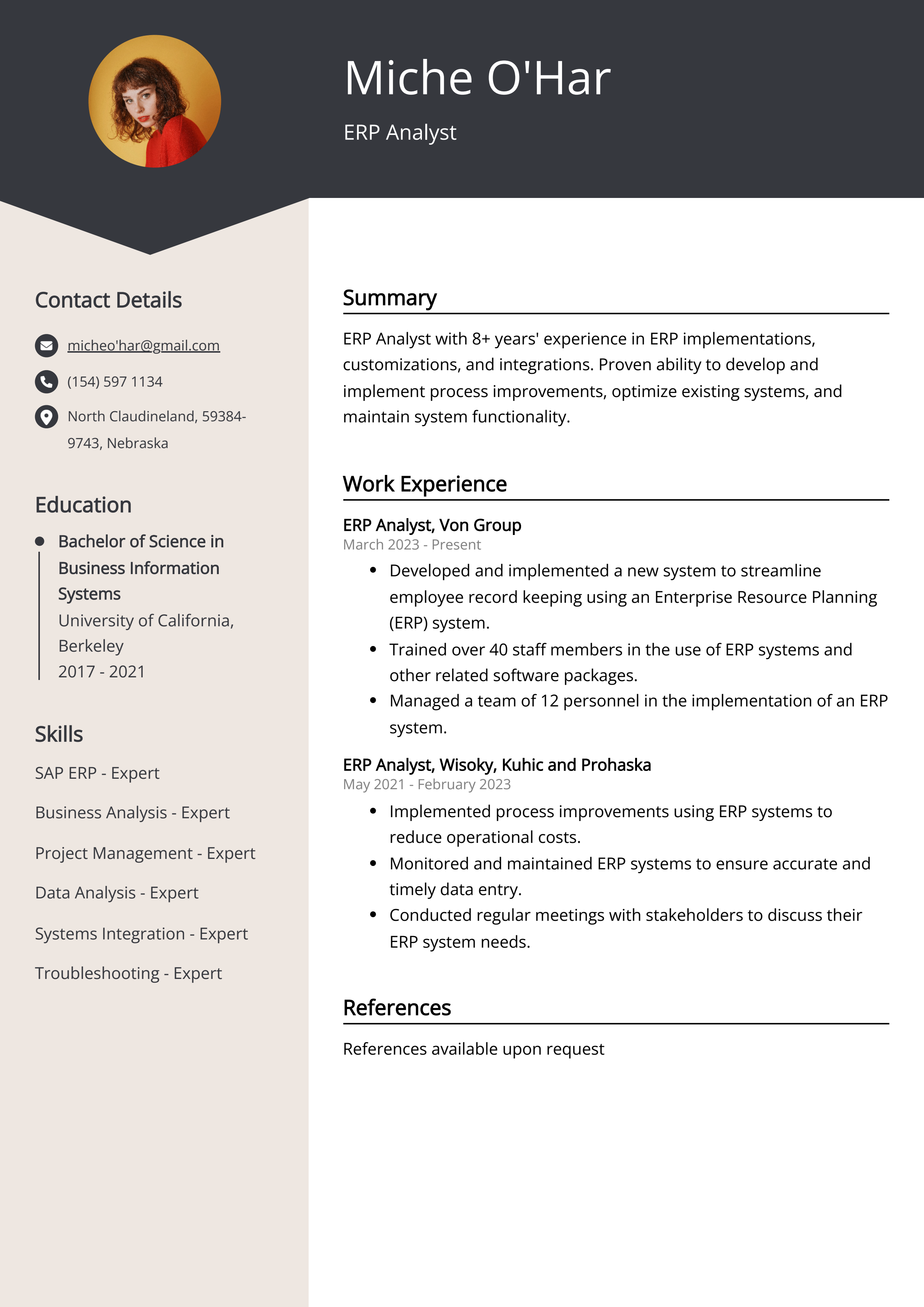
1. The “Process-Focused ERP Analyst” Resume
Source: resumaker.ai
This Odoo ERP analyst CV is simple, clean, and easy to scan, which works well for showcasing process-driven responsibilities. The work experience clearly highlights measurable improvements, user training, and workflow optimization.
2. The “Junior Data-Driven ERP Analyst” Resume

Source: himalayas.app
This is a strong early-career example with a clean layout and straightforward structure. The bullet points show real contributions in efficiency, accuracy, and adoption without overwhelming the reader.
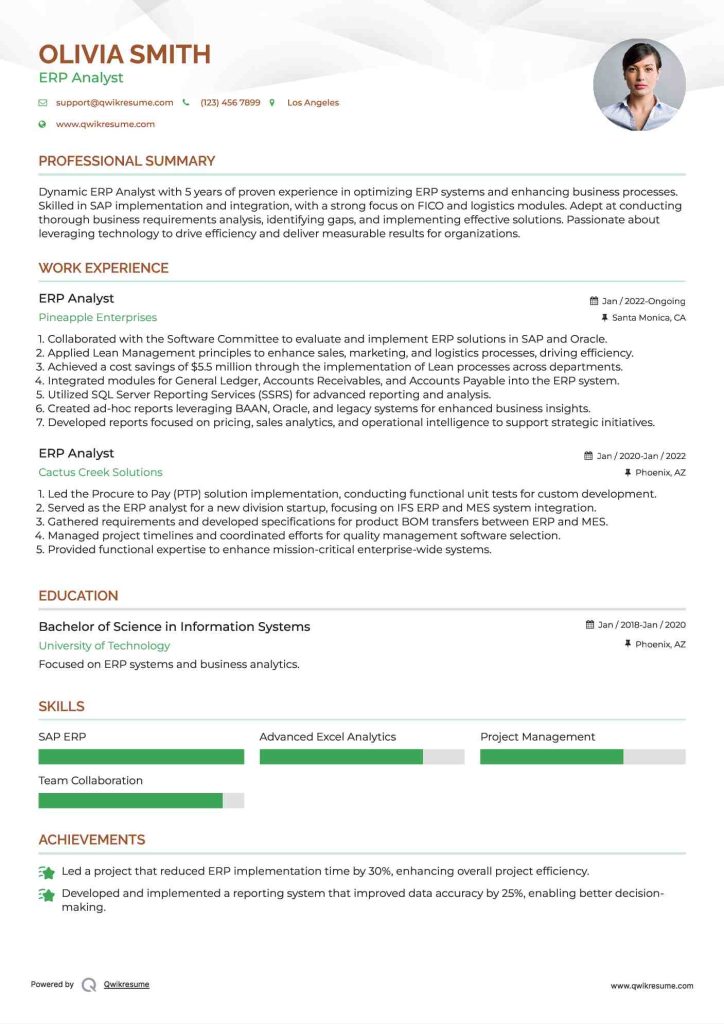
3. The “Process-Improvement & Reporting Specialist” Resume
Source: qwikresume.com
This resume stands out because it uses concrete achievements like cost savings and accuracy improvements. The clean structure and visual skill bars make the candidate’s strengths easy to understand at a glance.
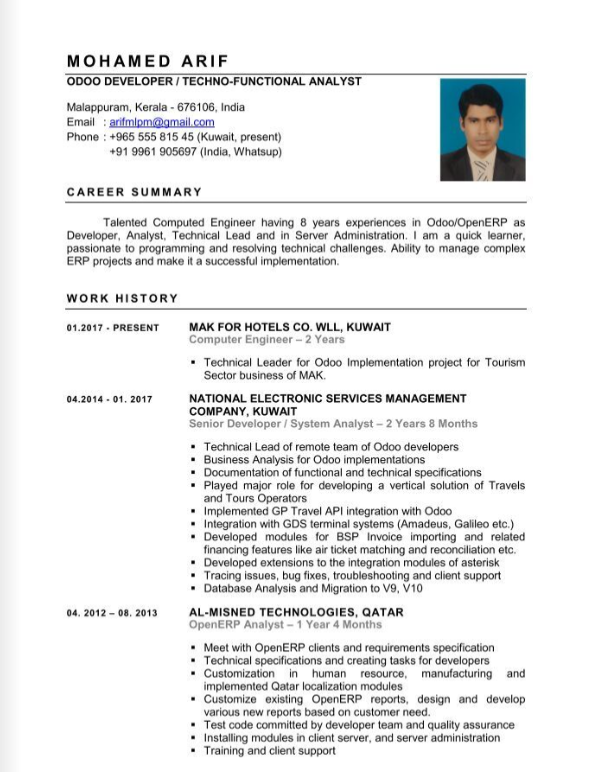
4. The “Techno-Functional Odoo Analyst with Deep Implementation Experience” Resume
Source: yumpu.com
This Odoo analyst resume sample is a great example of blending functional and technical Odoo experience across multiple modules. It shows full-cycle implementations, API integrations, and strong documentation skills, making it ideal for Odoo analyst roles.
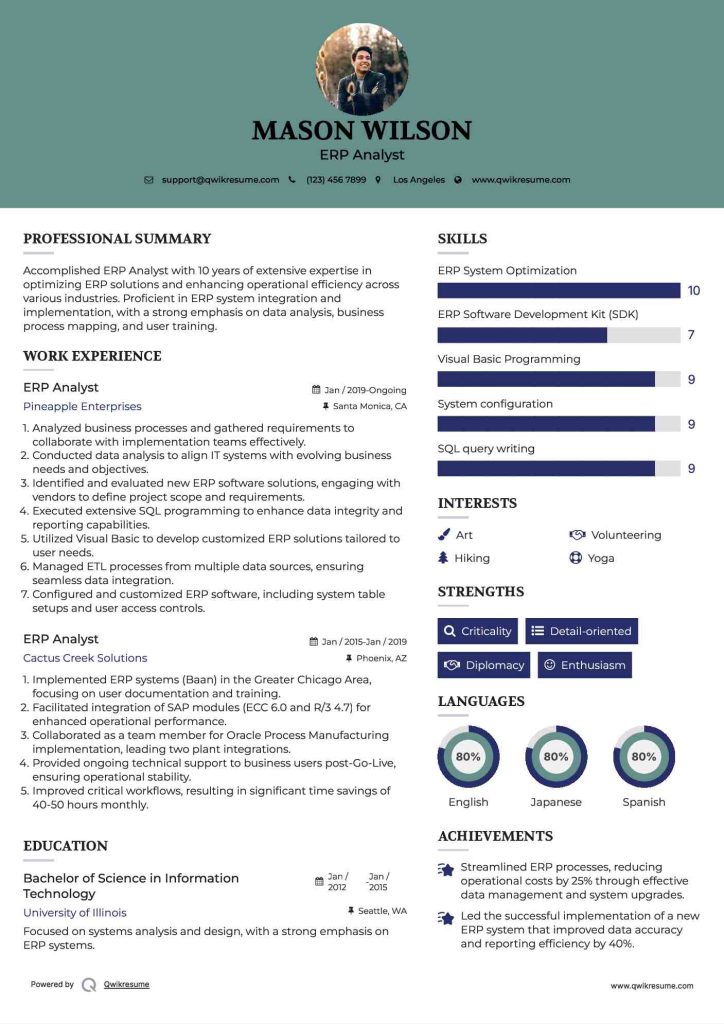
5. The “Senior ERP Analyst with Strong Technical Insight” Resume
Source: qwikresume.com
This is a strong example because it shows a well-rounded analyst profile: business process expertise, SQL knowledge, ERP configuration, and ETL experience. The skills section is visually clear, and the achievements include real numbers that prove impact. The layout also balances technical and functional strengths.
6. The “Process-Driven ERP Analyst with Strong Documentation Skills” Resume

Source: qwikresume.com
This CV example for Odoo analyst stands out because it highlights clear, measurable achievements and shows strong capability in documentation, BI reporting, and system integration – all key parts of an Odoo Analyst role. The layout is clean, the skills are quantified for quick scanning, and the work experience includes real business impact, making it a solid example of an analyst-focused CV.
7. The “Business-Focused Analyst with Strong Finance Skills” Resume
Source: qwikresume.com
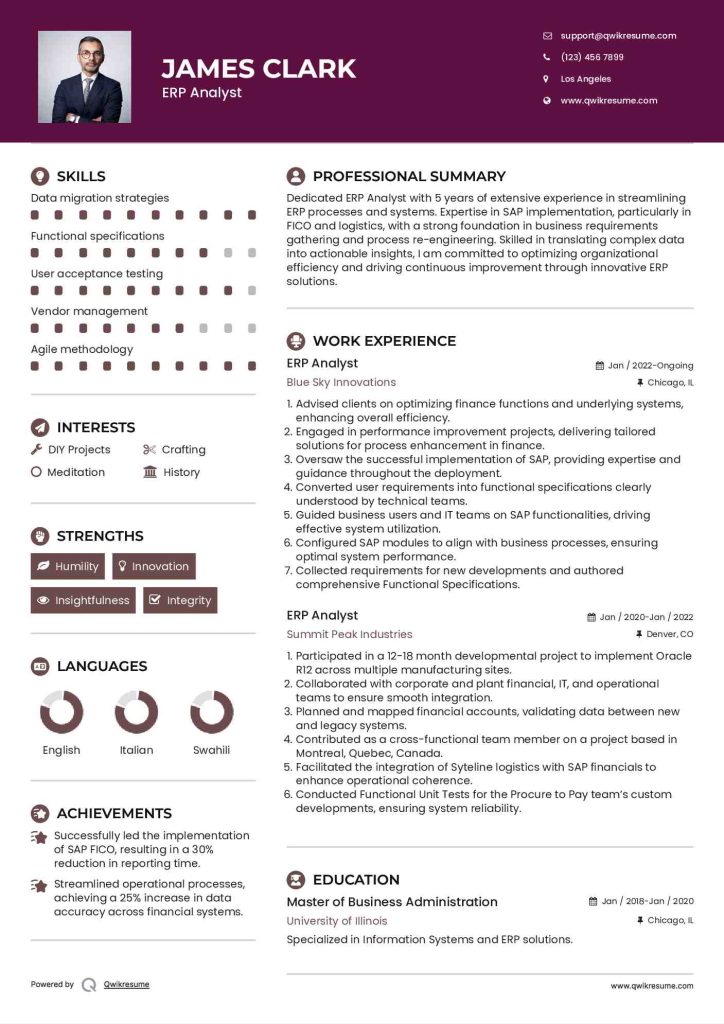
This CV works well because it highlights real process improvements, finance-focused experience, and measurable achievements. The layout is structured, the skills are clearly grouped, and the work experience details how the analyst converted business needs into actionable specifications.
8. The “Procurement & Inventory-Focused ERP Analyst” Resume

Source: qwikresume.com
This resume is a strong example because it clearly highlights domain specialization, which is extremely relevant for many Odoo Analyst roles. The work experience is structured, includes measurable results, and shows both functional and analytical responsibilities. Visual skill indicators make it easy for recruiters to quickly understand the candidate’s strengths.
9. The “System Optimization & Data-Driven Analyst” Resume

Source: tealhq.com
This resume works well as an Odoo Analyst example because it focuses on system audits, process optimization, data migration, and cross-functional collaboration – all core duties in Odoo ERP projects. It also uses measurable achievements and includes certifications that strengthen credibility for functional and technical ERP work.
10. The “Process Efficiency & Infrastructure Analyst” Resume

Source: tealhq.com
Although focused on network systems, this example still serves as inspiration for an Odoo Analyst CV because it shows clear problem-solving, process optimization, cross-team collaboration, and measurable achievements – the same qualities valued in Odoo ERP analysis work. The structure is clean, accomplishment-driven, and highlights certifications, making it a strong model for formatting and clarity.
11. The “Systems Integration & Data Flow Analyst” Resume
Source: tealhq.com
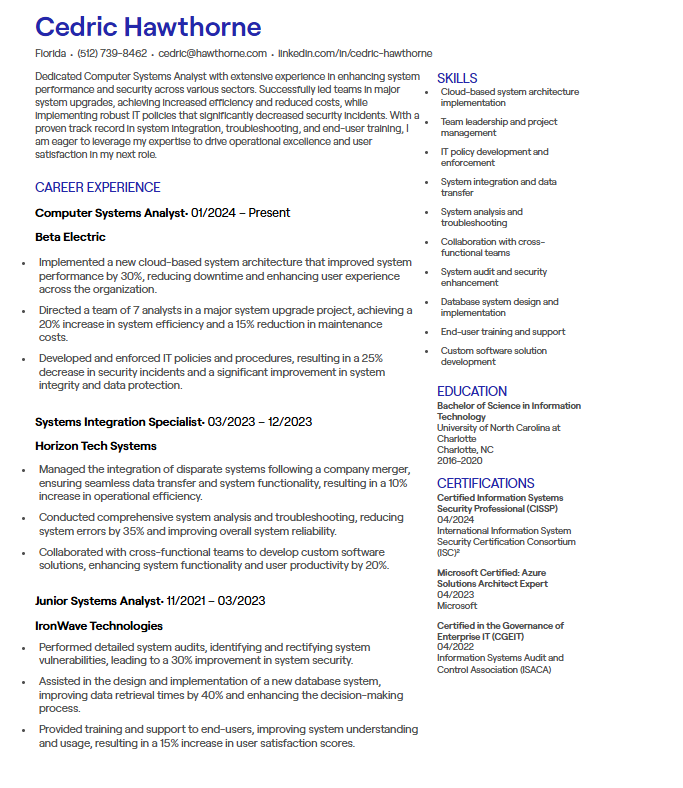
This resume is a good example because it highlights system integration, data transfer accuracy, troubleshooting, and cross-team work – all core tasks for an Odoo Analyst managing module flows and business processes. The measurable achievements (10–40% improvements) make the experience section strong and credible, and the layout clearly separates skills, certifications, and responsibilities.
12. The “Senior Process-Improvement Analyst” Resume

Source: himalayas.app
This resume stands out because it clearly shows measurable impact, efficiency, and reducing manual processes. It highlights experience with multiple ERP ecosystems, strong collaboration with business teams, and the ability to train large user groups. The clean layout also makes key achievements easy to scan, which is ideal for hiring managers.
Tips for Writing a Catchy Odoo Analyst Resume
A strong Odoo analyst resume demonstrates both functional expertise and tangible project impact. The tips below show how to highlight module knowledge, process experience, and measurable results:
- Show your module expertise clearly: Instead of writing “Worked with ERP modules,” list the exact ones: Sales, Purchase, Inventory, Accounting, MRP. Recruiters look for real module coverage, not generic ERP claims.
- Describe real process flows: Mention key business processes you handled, such as order-to-cash, procure-to-pay, stock replenishment, or invoicing workflows. This helps employers understand the depth of your Odoo functional knowledge.
- Include testing and UAT details: Many analysts skip this, but UAT coordination and scenario writing are major parts of the job. Show that you handled test cases, feedback rounds, or go-live validations.
- Highlight Odoo versions: Odoo v12, v13, v14, v15, v16, v17 all work differently. Listing versions instantly tells recruiters your level of experience.
- Be specific about workshop experience: If you ran requirement sessions, mapped processes, or helped teams restructure workflows, mention it. Workshop facilitation is a major advantage.
- Add experience with Odoo.sh environments: Even if you’re not a developer, exposure to Odoo.sh branches, staging tests, or logs shows you understand project workflows and deployments.
- Quantify your impact: Numbers help your CV stand out: number of users trained, modules implemented, warehouses handled, or improvements achieved.
- Mention cross-team collaboration: Analysts often bridge functional and technical teams. Show how you worked with developers, accountants, warehouse staff, or project managers.
- Emphasize data accuracy: If you helped with migration templates, CSV imports, or data cleaning, include it. Data is a huge part of Odoo projects.
If you’re getting ready for interviews, make sure your resume already covers topics often found in common Odoo analyst interview questions, such as process mapping, UAT steps, and handling feedback from business users.
Dos and Don’ts in Odoo Analyst Resume Creation
Writing an effective Odoo analyst resume is about highlighting relevant functional expertise while avoiding common pitfalls. These dos and don’ts guide you on presenting modules, processes, and measurable impact clearly.
Dos
Recruiters want to see concrete examples, not vague statements. Following these dos ensures your resume demonstrates skills, process knowledge, and teamwork effectively:
- Do list the exact Odoo modules you’ve worked with: Sales, Purchase, Inventory, Accounting, MRP, and CRM all mean different workflows. Clear module names help employers understand your strengths immediately.
- Do explain your process knowledge: Mention key flows like order-to-cash, procure-to-pay, stock moves, reconciliation, or manufacturing steps. This shows you understand real business operations.
- Do include your experience with testing and UAT: Analysts spend a lot of time writing test cases, validating features, and collecting feedback. Highlight this clearly.
- Do show your exposure to Odoo versions: Odoo v14, v15, v16, and v17 work differently. Recruiters want to see your version experience upfront.
- Do mention if you helped reduce customizations: Employers value analysts who can solve problems with smart configuration instead of unnecessary code changes.
- Do explain how you worked with developers: Good analysts produce clear functional specs, test scenarios, and feedback. Show your teamwork.
- Do highlight any experience with Odoo.sh: Even basic work with staging, logs, or deployments makes your CV stand out.
Don’ts
Avoiding common mistakes can make your Odoo analyst resume much more effective. These don’ts highlight what to leave out or clarify so recruiters focus on your true expertise:
- Don’t describe your experience too generally: Avoid statements like “Worked on ERP projects.” Instead, specify modules, processes, and responsibilities.
- Don’t list technical stacks you didn’t actually use: If you didn’t work with Python or XML views, don’t include them. It weakens your CV.
- Don’t leave out the scale of your projects: Include the number of users, warehouses, or companies when relevant. size matters in ERP projects.
- Don’t forget the business impact: Leaving out results (like fewer manual steps or better stock accuracy) makes your experience less convincing.
- Don’t mix Odoo experience with unrelated ERP systems unless relevant: If you used SAP or Oracle before, mention it briefly but keep the focus on Odoo.
- Don’t skip communication skills: Analysts work closely with teams, leaving this out can make your profile look incomplete.
- Don’t hide gaps in module experience: If you only worked with Sales and Inventory, say so. It’s better than pretending you did everything.